In light of the recent changes to various social media platforms, we decided to move #SmallPitch events to a platform that is entirely within our own control. Now that our first fully independent event is wrapped, here are some stats, behind-the-scenes insights, reflections, and improvements for the future!
To jump forward in this post, here are the sections:
- Event Recap
- Pitch & Request Stats
- How We Did It
- Issues & Improvements
- Infographics!
- Closing Thoughts
Event Recap
The January 2025 event was for marginalized authors only, and spanned a total of 1 week.
Pitch submission window ran for 48 hours from January 27 to 28. Writers submitted their pitches via Google Form, and submitted pitches were uploaded to a view-only database in real-time.
We took a day to review the pitches for rule violations. The pitch database was then put behind password protection and handed over to the editors for their use.
Editor request window ran for 4 days from January 30 to February 2. Each email notification of a pitch request was sent to the writer automatically and in real-time whenever an editor made a request. At the same time, the editor and the #SmallPitch team also each received an automatic email containing the details of the requested pitch(es).
Pitch & Request Stats
A total of 521 pitches were submitted by 389 writers (because each writer is allowed to submit up to three projects).
30 imprints (being 28 unique presses) made a total of 318 requests. Adjusting for the fact that some pitches received multiple requests, a total of 210 pitches received at least one request. That’s a request rate of 40.3%! Among the pitches that received requests, each of them received an average of 1.5 requests.
We’re absolutely floored by the turnout by both writers and editors alike! Thank you for your amazing support; you are the backbone that makes this event a reality. If your pitch request resulted in a success story, please reach out to us! We would love to feature you!
How We Did It
It’s rather simple, actually.
Google Form generates a spreadsheet. The spreadsheet is read in real-time via webhook by an e-commerce platform called SpreadSimple. In effect, the #SmallPitch Database is just an e-commerce shop in disguise, with settings and coding tweaked to serve our specific purpose.
Request emails were automated using Make (formally Integromat). Whenever an editor “checked out” their “cart” of pitches, Make read the cart data via webhook, parsed them, and instructed the #SmallPitch Gmail account to send out a templated email to each lucky writer with data parsed from the editor’s checkout form, including the press name and submission info.
SpreadSimple and Make aren’t free services, but all things considered, their pricing is reasonable. If you’re a pitch event organizer and you want to replicate this system for your events, please contact us! We’re happy to help you!
Issues & Improvements
As much as the event was a huge success, it wasn’t without hiccups.
A writer accidentally left out the @ sign in their email address. When that pitch was requested, Make wasn’t able to read the email address, and the error resulted in a stoppage of the automation process. The system notified us of the error immediately, and we notified the editors immediately to pause requests until the issue was resolved. During our troubleshooting, we accidentally processed the batch of bad data three times, which resulted in 26 writers receiving a triplicated request email. The 26 affected writers were immediately notified of the glitch.
The entire downtime lasted approximately 4 hours on January 30, which was owed mostly to the fact that our tech admin was away at her lunar new year family dinner. The actual time it took to troubleshoot and resolve the issue was 40 mins.
Another writer had a typo in their email, which resulted in an “address not found” bounce back when their pitch was requested. We were able to track down the writer on their social media and fix their email address. Their pitch request was forwarded to them manually.
The lesson we learned is twofold:
- When we conducted our review of the submitted pitches, we only reviewed the pitches for their content (i.e., no hate speech, no violation of the rules, etc.). We didn’t review writers’ email addresses because we assumed that writers would’ve double and triple checked their email address (as was strongly recommended by the instructions).
- Going forward: We will be more diligent in checking every aspect of the submissions.
- In order to make the Google Form as accessible as possible, we didn’t require sign-in to a Google account. Instead, writers were asked to type their own email addresses and as a result, no receipt of the completed form was emailed back to the writer.
- Going forward: Future events will still be open to all emails; we don’t want to make it a participation requirement to have a Gmail account. But we will enable email receipts so that the writer gets a copy of their pitch submission. This will confirm that their email address is correct.
We’re also reviewing your survey responses and compiling a big list of specific tweaks to eliminate confusion and improve our guidelines, database, and email receipts, but we shan’t inundate you with the technical details here! Thank you for your valuable feedback!
Infographics!
One of the benefits of the event being held on a system fully within our control is that we can parse the data! Here are some eye-candies for the graph-inclined. 👀
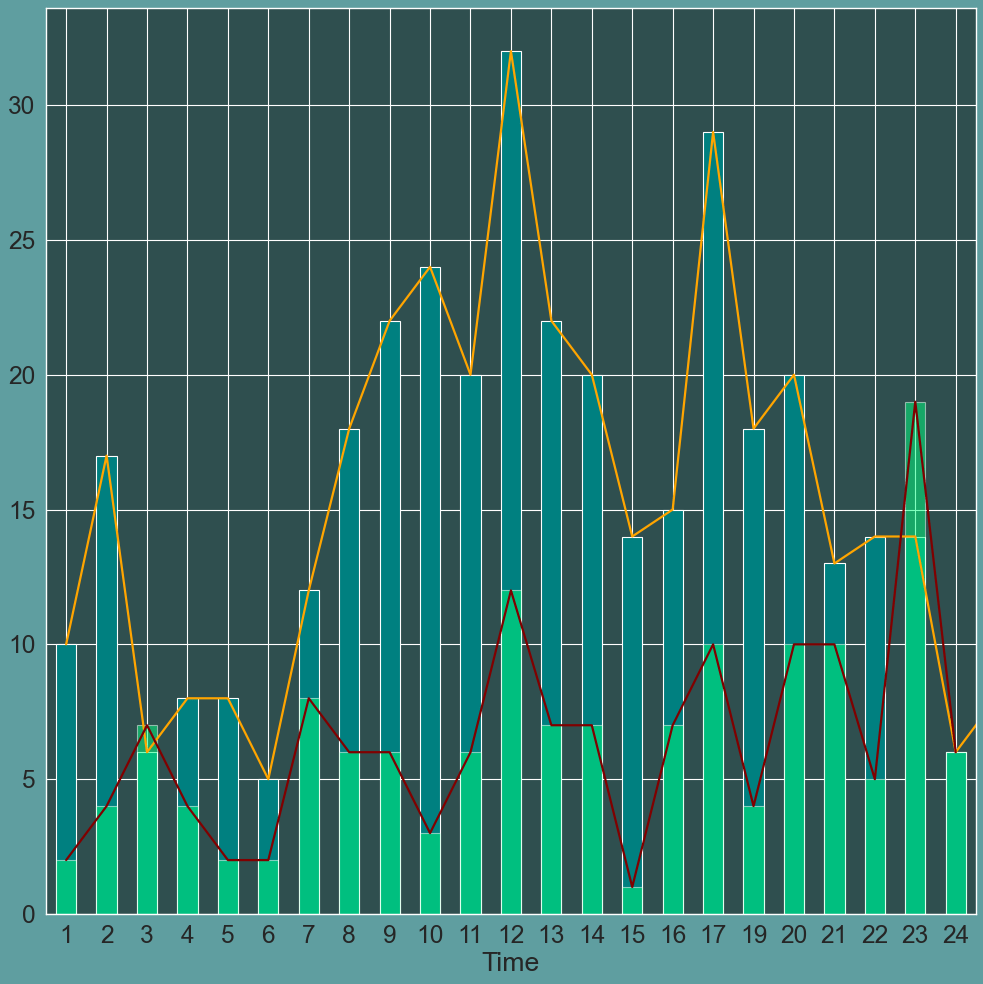
Fig. 1: Number of pitches submitted by hour of event. Day 1 numbers are represented by the darker teal bars. Day 2 numbers are represented by the lighter green bars. Notice the spike during the literal 23rd hour of the second day. A bunch of you left your submissions to the last minute. You know who you are! 😂

Fig. 2: Distribution of pitches across genre/subgenres. Unsurprisingly, fantasy (including retellings) is the biggest genre, followed by romance/erotica and general/contemporary. We’re really stoked to see so many of you writing LGBT+ fiction!
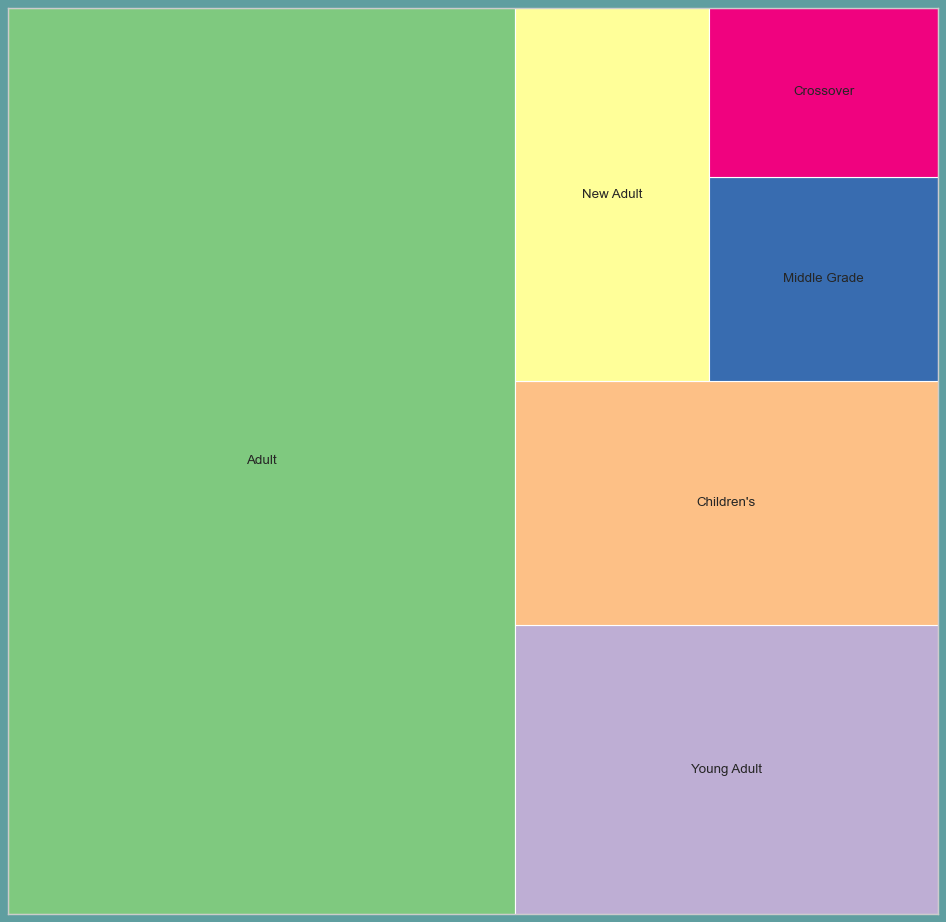
Fig. 3: Distribution of pitches across age categories. A little over half of you are writing for an adult audience, and the rest are distributed quite proportionally.

Fig. 4: Most frequently used words in your pitches. Over a hundred of your pitches must love/find family! And over sixty of your characters have secrets and new friends!
Closing Thoughts
#SmallPitch started almost a year ago as a wild idea in Millie’s mind. Less than a year later, it has grown into an independent pitch event with its own team, platform, website, Discord server, and community. Twenty-eight publishers trusted us in January, as well as hundreds of authors. This event was not only a success, but a promise to the future: #SmallPitch is growing and becoming a model of how online pitch events should be run.
We couldn’t do it without the writing and indie publishing community. Thus, to close this post, we extend a sincere thank you to all of you. We hope you joun us next time for a bigger and better pitch event.
See you in July!
 #SmallPitch, the big pitch event for small presses
Leave a comment